
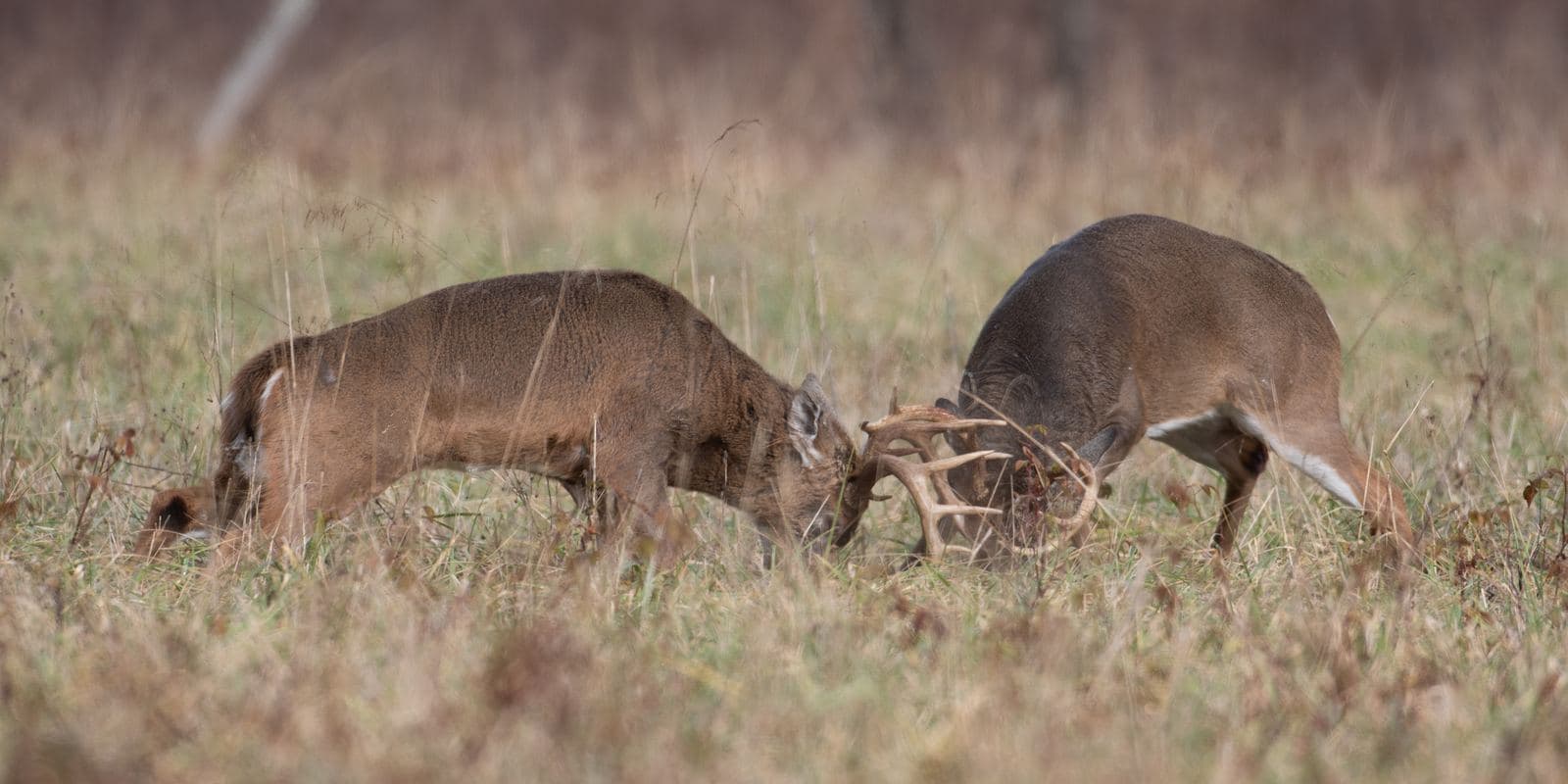
The 2026 Whitetail Rut Forecast: Real Dates by Region — and Why the Moon Keeps Losing to Science
The rut doesn't move. Photoperiod fixes peak breeding to the same tight window every year — what changes is how much of it you see in daylight. Here are the real dates by region, and the one variable actually worth forecasting.
Every October, the same industry ritual: magazines and apps roll out "this year's rut forecast," moon-phase charts promise a "lockdown by the 9th," and hunters burn vacation days chasing predictions that change every year.
Here's the secret the forecast industry doesn't love: the rut doesn't change every year. Peak breeding lands in the same tight window annually, because it's triggered by photoperiod — the shrinking daylight of fall — and the daylight calendar is fixed. Decades of fetal-aging data and deer-vehicle collision records from state agencies show the peak holding steady year after year, warm falls and cold falls alike, full moon or no moon.
What does change each year is how much of the rut you get to see in daylight. That's the part worth forecasting — and the part you can actually plan vacation days around. Here's the 2026 picture: the real dates by region, what the phases look like, and what actually moves daylight activity (spoiler: it's weather, not the lunar calendar).
Peak Breeding Dates by Region, 2026
| Region | Peak breeding window | Best hunting (seeking/chasing) |
|---|---|---|
| Midwest | Nov 12–15 (WI/MN a few days earlier, ~Nov 10–13) | Roughly Oct 28 – Nov 10 |
| Northeast | Mid-November, mirroring the Midwest | Late Oct – Nov 10 |
| West (MT, plains whitetails) | Nov 8–20 | Early November |
| North Georgia / Appalachians | Nov 8–18 | Early November |
| Deep South | All over the map — Dec in much of Texas, Jan into Feb in parts of AL/MS/LA | Check your state's fetal-data map |
Two things to notice. First, north of the Mason-Dixon line, the window is remarkably tight — mid-November, everywhere, every year. Second, the South is the exception: southern ruts scatter from October to February by region (a legacy of restocking history and mild winters), so southern hunters should pull their state agency's conception-date maps rather than borrowing Midwest dates.
And yes — those dates look like last year's, and next year's will look like these. That's the point. Print the table once; it's good for a decade.
The Phases, and How to Hunt Each One
Pre-rut (late October). Bucks are on their feet earlier each day, scraping and rubbing, still on bed-to-feed patterns. Hunt scrape lines and staging areas off food, evenings especially. This is when your summer scouting and camera intel is still worth something — enjoy it, because it's about to expire.
Seeking and chasing (roughly Halloween through Nov 10). The best hunting of the entire season. Bucks abandon patterns and cover ground looking for the first estrous does; mature deer move in daylight. Hunt pinch points, funnels, and ridge saddles between doe bedding areas — all day. If you only get five vacation days, take them in this window. This is the stretch behind the November spike in hunting search traffic we dug into earlier — because it's when everything happens.
Peak breeding / lockdown (mid-November). Counterintuitively, the actual peak can hunt slower — bucks are locked down with does, holed up in cover, moving little. Hunt doe bedding edges, and be patient; when a buck loses his doe, he's on his feet looking for the next.
Post-rut (late November onward). Worn-down bucks return to food. Hunt the best food source in the neighborhood, afternoons, especially when the temperature drops — which is when a cold-weather layering system stops being optional.
What Actually Changes Year to Year
If breeding dates are fixed, why do some Novembers feel on fire and others feel dead? Three variables — none of them lunar:
Weather is the whole ballgame. A warm early November pushes rut activity into the dark; the deer still breed on schedule, you just don't see it. A sharp cold front in the first ten days of November is the single best daylight-movement trigger in deer hunting. The practical 2026 forecast strategy isn't a date circled months ahead — it's being ready to burn a vacation day on 48 hours' notice when a front is coming through your county between October 28 and November 12. Watch the 10-day forecast, not the moon app.
Mast changes where, not when. A heavy acorn year keeps does (and therefore bucks) in the timber; a mast failure concentrates everything on ag fields and food plots. Scout the acorns in October and adjust your locations — the calendar stays the same.
Pressure changes what you see. By November, deer on hard-hunted public land have a PhD in avoiding humans during daylight. The fix is location (deeper, nastier, overlooked cover), not timing.
And the moon? The 2026 rut will include a November full moon, and moon-theory content will claim it matters. Conception-date data across states and decades shows breeding timing holding steady regardless of phase. If moon position helps you pick a morning versus evening sit, fine — it costs nothing. Just never trade a cold front for a moon chart.
Planning Your 2026 Rut Vacation
The practical takeaway, by priority:
1. Book Nov 1–10 off now if you hunt north of Tennessee. That window covers seeking-chasing in nearly every northern state, every year.
2. Keep one flex day for the first real cold front after October 25 — that's your bonus all-day sit.
3. Southern hunters: look up your county's actual dates from your state agency before copying anyone's calendar.
4. Hunt all day Nov 5–12 if you can bear it. Midday movement during seeking-chasing is real, and the 10 a.m.–2 p.m. window kills giants every year while most hunters are back at the truck.
And a housekeeping note for the week after: success in mid-November means a deer to break down in cold weather — the easiest processing conditions of the year. Our field-to-freezer guide covers it, and if you're in a CWD zone, check testing and transport rules before you move the carcass.
The Bottom Line
The 2026 rut forecast is the same as the 2025 forecast and the 2036 forecast: mid-November breeding across the North, chaos from Halloween to the 10th, weather deciding how much of it you witness. The hunters who tag out in November aren't the ones with the best moon chart — they're the ones in a tree when the front rolls through. Set the dates, watch the weather, and be there.
Sources
- 2026 Deer Rut Predictions: When the Rut Starts by Region — onX Hunt
- 2026 Rut Predictions by State — Trail Pro Intel
- 2026 Whitetail Rut Prediction: Best Dates to Hunt by Region — Archery Hunting
- Wisconsin Rut Prediction 2026 — Trail Pro Intel
November sits are long and cold — gear up for them at half price. Browse used insulation, bibs, and cold-weather systems from Sitka, KUIU, and First Lite on Second Nature, and be the hunter still on stand at 1 p.m. when he shows up.
In the market for gear?
Browse verified secondhand listings at 40–60% below retail — or turn the gear hanging in your closet into cash.
More Articles

Does KUIU Run Small? The Honest Sizing and Fit Guide
KUIU vs Sitka vs First Lite: Which Brand Is Actually Worth It?
The Participation Paradox: America Is Going Outside in Record Numbers — So Why Is Hunting Still Shrinking?
The Flesh-Eating Parasite America Beat 60 Years Ago Is Back — and Texas Deer Are in Its Path
Ready to find your next deal?
Browse hundreds of used hunting gear listings from verified sellers.
The Second Nature Newsletter
The best used hunting gear deals and reads like this one, in your inbox. Free, no spam, unsubscribe anytime.
Fresh on the marketplace
Verified sellers, 40–60% below retail.
Sitka Ambient 200 Jacket
$285.0019% off
Sitka Ambient Jacket 200
$275.0015% off
Mystery Ranch Treehouse 20 | Bottomland | NEW UNOPENED
$175.0027% off