Policy & Regulations6 min readMar 30, 2026by Mac Sage
Chronic Wasting Disease in 2026: What Every Hunter Needs to Understand
Chronic Wasting Disease isn't new. It was first identified in captive mule deer in Colorado back in the 1960s. But what is new — and what should have the attention of every deer and elk hunter in North America — is how fast it's spreading, how high prevalence rates are climbing in certain areas, and how aggressively states are rewriting their regulations in response. If you hunt cervids anywhere in the United States, CWD is no longer something you can afford to ignore. It's shaping seasons, changing transport rules, and influencing herd management decisions that directly affect the tags in your pocket.
What CWD Actually Is
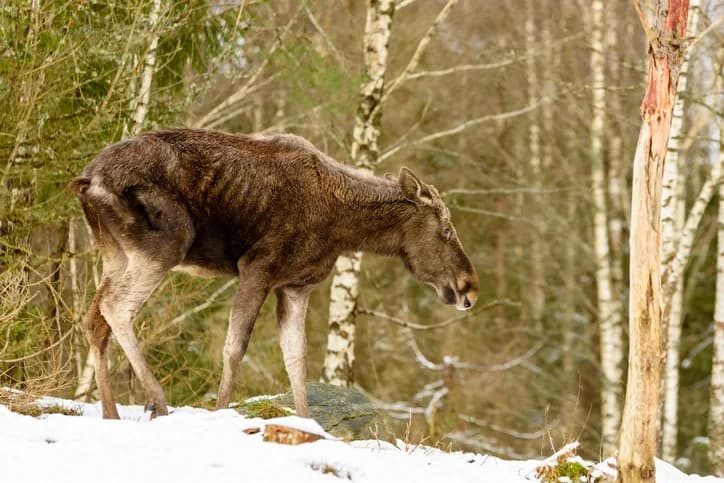
Chronic Wasting Disease is a fatal neurological disorder that affects members of the cervid family — whitetail deer, mule deer, elk, moose, and caribou. It belongs to a group of diseases called transmissible spongiform encephalopathies, which are caused by misfolded proteins known as prions. These prions attack the brain and nervous system, creating microscopic holes in the tissue that eventually lead to severe weight loss, abnormal behavior, loss of coordination, and death. There is no cure and no vaccine.
What makes CWD particularly insidious is how it spreads. Infected animals shed prions through saliva, urine, feces, and blood, contaminating the soil, water, and vegetation around them. Once prions enter the environment, they can persist in soil for years — potentially decades — remaining infectious long after the original host has died. This means CWD doesn't just disappear when an infected animal is removed from the landscape. The ground itself becomes a reservoir for the disease.
Animals can carry CWD for 18 months or longer before showing any visible symptoms, which means apparently healthy deer and elk can be spreading the disease without anyone knowing. By the time a deer looks sick — gaunt, disoriented, drooling — it has likely been shedding prions into the environment for over a year.
How Far It's Spread
36 U.S. states and 5 Canadian provinces have now confirmed CWD in free-ranging or captive cervids as of 2026.
That number has been climbing steadily, and new detections continue to make headlines. In early 2026, two deer tested positive for CWD at Gettysburg National Military Park in Pennsylvania. In southwestern Nebraska, 197 positive cases were detected during the 2025 deer season surveillance alone.
The national map of CWD is no longer limited to a handful of western states. The disease has established itself across the Midwest, the Great Plains, and is pushing further into the Southeast and Northeast. States like Missouri, Virginia, North Carolina, and Louisiana are all actively managing confirmed cases within their borders.
Prevalence in the hardest-hit areas: In Montana, the highest three-year prevalence has reached 39% in whitetail deer and 23% in mule deer. In parts of Wyoming, up to 20% of tested deer are carrying CWD.
Those aren't fringe numbers. When four out of every ten whitetails in a drainage test positive, you're looking at a disease that's fundamentally altering the herd.
What States Are Doing About It
State wildlife agencies are responding with a patchwork of regulations that vary widely depending on how entrenched CWD is in their deer and elk herds.
Colorado
Colorado will require mandatory CWD testing on all elk harvested during rifle seasons from specific hunt codes in 2026. Deer testing remains voluntary at $25 per animal. The state has been dealing with CWD longer than almost anywhere else and has some of the most developed surveillance infrastructure in the country.
Missouri
Missouri is taking a different approach. After years of aggressive CWD management zones, antler point restrictions, and extended firearms seasons in affected areas, the Missouri Department of Conservation is now proposing to roll back some of those measures. With CWD prevalence remaining low and deer herds staying healthy statewide, MDC is considering removing CWD management zones and the associated special season regulations.
Washington
Washington now requires any hunter who harvests a deer, elk, or moose in the state's Eastern Region to submit a lymph node sample for CWD testing within five days. That's a mandatory requirement, not a voluntary one, and it applies to salvage animals as well. Hunters must submit the whole head with at least three inches of neck attached or provide extracted retropharyngeal lymph nodes.
Louisiana
Louisiana is enforcing strict carcass transport rules within its CWD control areas. Hunters cannot bring whole deer out of those zones. They're limited to deboned meat, cut and wrapped portions, clean skull plates with antlers, tanned hides, finished taxidermy mounts, and cleaned teeth. No spinal columns, no whole heads.
Utah
Utah has created limited-entry buck deer hunts specifically designed to address CWD in the La Sal and Castle Valley areas, and hunters who harvest deer in those units must submit CWD samples.
What This Means for You
Whether or not your home state has a CWD problem today, the disease is almost certainly moving in your direction. Here's what you should be doing as a hunter in 2026.
Get your deer and elk tested. Even if testing is voluntary in your state, submitting samples helps wildlife agencies track the disease's spread and make better management decisions. Many states offer free or low-cost testing through check stations or mail-in programs.
Learn your state's carcass transport rules before you load up the truck after a hunt. Many states now prohibit transporting whole carcasses, brain tissue, or spinal columns across certain boundaries. Violating these rules can result in significant fines and the confiscation of your harvest.
Process your meat carefully. The CDC recommends that hunters not eat meat from animals that test positive. Avoid consuming brain, spinal cord, eyes, spleen, and lymph node tissue from any deer or elk harvested in a known CWD area.
Practice responsible disposal. Don't dump gut piles or carcass remains from a CWD-positive area onto new ground. Use designated disposal sites or a landfill. Dragging prion-contaminated material to a new location can introduce CWD to previously clean areas.
The Bigger Picture
CWD is not going away. The nature of prion diseases means there is no quick fix, no herd vaccination program on the horizon, and no way to decontaminate millions of acres of infected soil. What wildlife agencies can do — and what they need hunters to support — is manage the spread through testing, surveillance, targeted harvest, and carcass transport enforcement.
Hunters are the first line of defense. The data generated by testing harvested animals is the single most important tool wildlife managers have for understanding where CWD exists and how fast it's moving. Every sample submitted gives biologists a clearer picture of the problem and a better foundation for making management decisions that protect herds for the long term.
This isn't a problem for someone else's state or someone else's hunting season. It's happening now, it's expanding, and the way hunters respond in 2026 and beyond will shape the future of deer and elk hunting in North America for generations.
In the market for gear?
Browse verified secondhand listings at 40–60% below retail — or turn the gear hanging in your closet into cash.
More Articles

Ready to find your next deal?
Browse hundreds of used hunting gear listings from verified sellers.
The Second Nature Newsletter
The best used hunting gear deals and reads like this one, in your inbox. Free, no spam, unsubscribe anytime.