
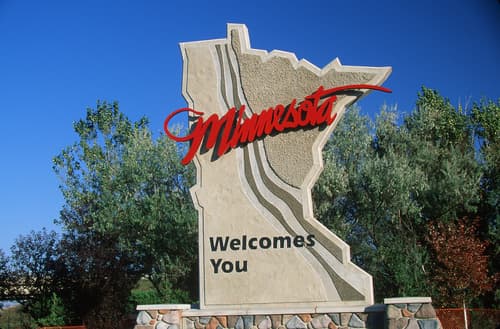
Minnesota Goes Rifle Statewide: The 2026 Rule Change Southern Hunters Need to Know
For the first time in over 80 years, centerfire rifles are legal across most of Minnesota.
For more than eight decades, where you hunted deer in Minnesota determined what you could carry. If you lived in the farm country of the southern part of the state, you were limited to a shotgun, muzzleloader, or handgun for the firearms season. Rifles were off-limits. That long-standing rule, known to generations of hunters simply as the "shotgun zone," is now gone. Beginning with the 2026 season, legal centerfire rifles are allowed statewide wherever deer hunting is permitted, unless an individual county chooses to opt back into the restriction. It's one of the most significant changes to Minnesota deer hunting in living memory, and if you hunt the southern half of the state, it directly affects how you'll head into the woods this fall.
Here's what changed, why it changed, and what you need to confirm before opening day.
A Rule That Dates Back to the 1940s
To understand why this is such a big deal, you have to understand how long the shotgun zone has been part of Minnesota hunting culture. The state first began restricting the types of firearms hunters could use in certain areas back in 1942. The zones were created in the 1940s as a deer-population and harvest-management tool, designed to limit the deer kill in the more open, less forested, and more densely populated southern counties.
The logic of the era was straightforward. Shotguns firing slugs have a much shorter effective range than centerfire rifles. In flat, open farm country with scattered homes and roads, limiting hunters to short-range firearms was seen as a way to both manage the harvest and address safety concerns about long-range rifle bullets traveling across open ground. For southern Minnesota hunters, the shotgun was simply the way deer season worked, generation after generation.
What the New Law Actually Says
The change was approved during Minnesota's last legislative session, and it eliminates the statewide shotgun-only zones starting in 2026. Under the new framework, hunters may use either a legal rifle or a shotgun across the state, rather than being locked into shotguns based on which county they hunt.
It's worth being precise about what counts as a legal rifle, because the rules are specific. For big game in Minnesota, a legal rifle must be centerfire and at least .22 caliber. That definition matters, so don't assume any rifle in your safe qualifies. If you're planning to take advantage of the change, confirm that your rifle and cartridge meet the centerfire, minimum-caliber requirement before the season.
For many southern Minnesota hunters, this opens the door to using rifles their friends and family in the northern part of the state have hunted with for years. It can mean greater effective range, flatter trajectories, and for some hunters, more confidence on longer shots across open fields.
The Catch: Counties Can Opt Back In
Here's the part that makes this change more complicated than a simple statewide switch, and the reason you can't just assume rifles are legal where you hunt. The new law includes a provision that lets counties that were previously shotgun-only choose to keep that restriction in place. To do so, a county must hold public hearings and formally vote to remain shotgun-only.
That means Minnesota's firearms map is now a patchwork that depends on local decisions, and those decisions have been playing out county by county. As of mid-April 2026, more than 30 counties had approved rifle use, while nine counties had voted to remain shotgun-only. Counties faced deadlines to make their decisions, so the map has been shifting through the spring as local boards held their hearings and cast their votes.
The practical upshot is critical: rifle legality now varies by county, and it's on you to know the rules for the specific county you plan to hunt. A rifle that's perfectly legal in one county may be prohibited in the county next door if that county opted to keep the shotgun restriction. Before you buy a tag, sight in a rifle, or head out on opening morning, check the current, official status for your exact hunting location through the Minnesota DNR. Don't rely on what was true last year, what a buddy told you, or what the neighboring county allows.
Is It Safe? What Wisconsin's Experience Suggests
Any time a state expands rifle use in farm country, safety questions come up, and they're fair questions. The shotgun zones existed partly out of concern about rifle bullets traveling long distances in open, populated terrain. Opponents of the change have raised those same worries.
Supporters point to a useful real-world comparison next door. Wisconsin eliminated its own shotgun-only zones back in 2013, expanding rifle use across much of the state. In the years since, Wisconsin did not see an increase in hunting-related shooting incidents tied to the change. That track record doesn't erase the need for caution, but it offers reassurance that responsible rifle use in farm country can be managed safely.
The expanded opportunity also raises the stakes on fundamentals. A centerfire rifle reaches much farther than a slug gun, which makes knowing your target and what lies beyond it more important than ever. Be certain of a safe backstop, be honest about your effective shooting range, and put in the practice to make clean, ethical shots. New capability comes with new responsibility.
What You Should Do Before the Season
If you hunt southern Minnesota, here's a simple checklist heading into 2026. First, confirm your county's status directly with the DNR, since rifle legality now depends on whether your specific county opted to keep the shotgun restriction. Second, make sure any rifle you plan to use meets the legal definition: centerfire and at least .22 caliber. Third, if you're switching from a slug gun to a rifle for the first time, give yourself plenty of range time to get comfortable and properly sighted in well before opening day. And finally, double down on the basics of safe shooting, because longer-range firearms demand it.
The Bottom Line
After more than 80 years, Minnesota's shotgun zone is history, and centerfire rifles are now legal across most of the state. For southern hunters, it's a genuine expansion of opportunity, and a chance to hunt with firearms that were off-limits their entire lives. But the county opt-out provision means the rules are no longer one-size-fits-all. The single most important thing you can do is verify the regulations for the exact county you'll hunt before you head out. Know your county, know your firearm, and hunt safely, and you'll be ready to take advantage of one of the biggest changes Minnesota deer hunting has seen in generations.
In the market for gear?
Browse verified secondhand listings at 40–60% below retail — or turn the gear hanging in your closet into cash.
More Articles

Ready to find your next deal?
Browse hundreds of used hunting gear listings from verified sellers.
The Second Nature Newsletter
The best used hunting gear deals and reads like this one, in your inbox. Free, no spam, unsubscribe anytime.
Fresh on the marketplace
Verified sellers, 40–60% below retail.
KUIU Guide Pro Hooded Jacket
$209.0025% off
First Lite Furnace Quarter Zip
$115.0023% off
Sitka Hudson Bib
$299.0050% off