
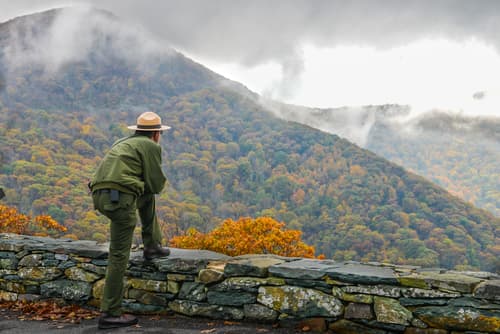
What the Forest Service Overhaul Could Mean for Hunters and Anglers
The Forest Service manages 193 million acres—much of it prime hunting and fishing country.
If you hunt or fish on public land, there's a strong chance the U.S. Forest Service manages some of your favorite ground. The agency oversees roughly 193 million acres of national forests and grasslands, a sprawling network that includes some of the best elk country, trout water, and backcountry hunting destinations in the nation. So when the Forest Service announces the biggest reorganization in its modern history, sportsmen and women have every reason to pay attention. The changes now underway are sweeping, they're moving fast, and the agency has made clear it intends to proceed with or without approval from Congress.
Here's a clear breakdown of what's actually happening, why some conservation groups are alarmed, and what it could mean for the public lands you rely on.
What the Reorganization Actually Does
In late March 2026, the USDA announced it would move the Forest Service headquarters out of Washington, D.C., and relocate it to Salt Lake City, Utah. That headline grabbed attention, but the headquarters move is only the most visible piece of a much larger restructuring.
The core of the plan is a shift away from the agency's long-standing regional structure toward what officials are calling a "state-based leadership model." Under the current system, national forests are supported by nine regional offices spread across the country. The reorganization closes all nine of those regional offices. In their place, the Forest Service is building a smaller network of Operations Service Centers, located in Albuquerque, New Mexico; Athens, Georgia; Fort Collins, Colorado; Madison, Wisconsin; Missoula, Montana; and Placerville, California. These centers are meant to handle the administrative and operational support that regional offices once provided, with day-to-day leadership pushed down to the state level.
The agency frames all of this as a way to cut administrative duplication, speed up decision-making, and put more resources toward on-the-ground forest management. On paper, a leaner bureaucracy with faster decisions sounds like something most public-land users could get behind. The concern is in the details, and especially in what's being cut to get there.
The Research Cuts That Worry Scientists
The piece of the overhaul drawing the sharpest criticism has nothing to do with office locations. It's the decision to dramatically shrink the agency's research capacity. The plan calls for shutting down 57 of the Forest Service's 77 research facilities and consolidating the survivors under a single research organization based in Fort Collins, Colorado.
That's not a minor trim. Forest Service research stations study the science that underpins how our public lands are managed: wildlife habitat, forest health, fire behavior, watershed function, and the long-term effects of drought and climate on the landscapes hunters and anglers care about. The Public Employees for Environmental Responsibility group bluntly described the move as the agency "shedding research capacity," and warned that closing dozens of stations and scattering or losing the scientists who staff them could take decades of accumulated local knowledge with them.
For sportsmen, the connection is direct even if it isn't obvious. The habitat work that keeps elk herds healthy, the watershed studies that protect trout streams, and the fire science that shapes how forests are thinned and burned all flow from this research. Weaken the science, critics argue, and you weaken the foundation for good management decisions on the ground.
Why the Timing Has Sportsmen Nervous
Conservation and hunting groups aren't just reacting to the substance of the plan. They're worried about when it's happening. The reorganization is rolling out in the middle of what forecasters are warning could be one of the worst wildfire seasons in a decade, with millions of acres expected to burn across the West.
Ryan Callaghan, president and CEO of Backcountry Hunters & Anglers, has publicly voiced reservations about the timing, pointing out that tearing apart the agency's management structure during an active and severe fire season is a risky moment to be reshuffling who's in charge of what. When a major fire hits a national forest, clear lines of authority and experienced regional staff matter enormously for the response. Dissolving regional offices and reassigning personnel mid-crisis raises legitimate questions about whether the agency can respond as effectively this year.
There's also the matter of how the changes are being pushed through. The Forest Service has signaled it will implement the reorganization with or without congressional approval, and additional phases, including the formal elimination of regional and station structures, are set to unfold over the coming year. That go-it-alone approach has unsettled groups that would normally expect a long public process before changes of this magnitude.
What It Could Mean for Your Access and Your Hunts
So what does all this mean for the average hunter or angler heading into the fall? Honestly, the full picture won't be clear for a while, because the reorganization is being implemented in stages. But a few practical takeaways are worth keeping in mind.
First, your access to national forest land is not changing. This reorganization is about how the agency is structured internally, not about closing forests or restricting where you can hunt and fish. The trails, trailheads, and units you've always used remain open public land.
Second, expect possible friction in services that depend on agency staff. Things like permit processing, special-use approvals, road and trail maintenance, and on-the-ground project work can slow down when an organization is in the middle of a major restructuring and losing experienced people. If you rely on the Forest Service for anything beyond simple access, build in extra time and confirm details directly with your local ranger district.
Third, stay alert during fire season. With the overhaul happening alongside a dangerous fire year, closures and conditions can change quickly. Always check the current status of your unit before you travel, monitor fire and closure updates, and have a backup plan in case your primary spot is affected.
The Bottom Line
The Forest Service overhaul is one of the most consequential public-lands stories of 2026, and it's still unfolding. Supporters see a long-overdue effort to cut red tape and put more focus on managing forests. Critics, including major hunting and angling groups, worry that gutting research capacity and dismantling the regional structure, especially during a severe fire season, could undermine the very lands sportsmen depend on. The smartest move for hunters and anglers right now is to stay informed, engage through the conservation groups that advocate on your behalf, and keep a close eye on how these changes play out on the ground over the next year. Public land is the backbone of America's hunting and fishing heritage, and how it's managed is always worth watching closely.
In the market for gear?
Browse verified secondhand listings at 40–60% below retail — or turn the gear hanging in your closet into cash.
More Articles

Ready to find your next deal?
Browse hundreds of used hunting gear listings from verified sellers.
The Second Nature Newsletter
The best used hunting gear deals and reads like this one, in your inbox. Free, no spam, unsubscribe anytime.
Fresh on the marketplace
Verified sellers, 40–60% below retail.
KUIU Guide Pro Hooded Jacket
$209.0025% off
First Lite Furnace Quarter Zip
$115.0023% off
Sitka Hudson Bib
$299.0050% off