Should E-Bikes Be Allowed Where You Hunt? The 2026 Rules and the Argument
Hunting e-bikes can haul gear and cover ground fast—but where you can legally ride one is complicated.
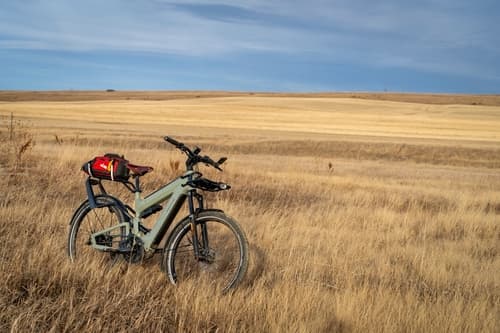
Few pieces of gear have divided hunters as sharply as the electric bike. To some, an e-bike is a game-changer: a quiet, sweat-free way to cover miles of backcountry, reach spots other hunters won't, and haul a heavy pack or even a quartered animal back to the truck. To others, it's a shortcut that crowds pressured areas, chips away at the idea of fair chase, and blurs the line between a bicycle and a motor vehicle. As e-bikes get more popular and more capable, the debate over where they belong on public land has only grown louder heading into 2026. Here's what the rules actually say and why the argument is so heated.
First, Know Your E-Bike Classes
Before you can understand the rules, you need to understand how e-bikes are categorized, because the class of your bike often determines where you can legally ride it. The industry uses a three-class system.
A Class 1 e-bike provides motor assistance only while you're pedaling, and the motor cuts out once you hit 20 miles per hour. A Class 2 e-bike adds a throttle, meaning it can propel you without pedaling at all, also capped around 20 miles per hour. A Class 3 e-bike is pedal-assist like Class 1 but allows assistance up to 28 miles per hour. Across the board, the Bureau of Land Management defines an e-bike as a bicycle with a small electric motor of no more than 750 watts, roughly one horsepower, that assists the rider.
Those distinctions matter because land managers and states often treat the classes differently. A trail that welcomes a Class 1 bike may prohibit a throttle-driven Class 2, so knowing exactly what you own is step one.
What Federal Land Managers Actually Allow
Here's where a lot of hunters get tripped up, because the rules are not as permissive as e-bike marketing sometimes implies. The two agencies that manage most federal hunting ground, the U.S. Forest Service and the BLM, both take a fairly cautious approach.
The Forest Service is the stricter of the two. It considers all e-bikes, every class, to be motorized vehicles. That's the key point. Because they're classified as motorized, e-bikes are generally allowed only on roads and trails that are already open to motor vehicles. They are not permitted on non-motorized trails, the quiet foot and mountain-bike paths that make up much of a national forest, unless a local official goes through a formal designation process to specifically open them. Just as importantly, since e-bikes count as motorized, they're subject to the same seasonal restrictions and closures as any truck or ATV. If a road closes to motor vehicles during hunting season, your e-bike is closed out too.
The BLM operates on a similar framework but with a bit more flexibility. E-bikes are legal on any open off-highway-vehicle area or motorized trail on BLM land. Beyond that, authorized officers can choose to allow Class 1, 2, and 3 e-bikes on some non-motorized roads and trails through land-use planning decisions, and certain non-motorized trails may be opened to e-bikes with written authorization from a BLM manager. The result is a patchwork that varies from one district to the next.
The practical takeaway is simple but crucial: on federal land, treat your e-bike like a motor vehicle, not a bicycle. Where motorized use is allowed, you're likely fine. Where it isn't, you're probably not, regardless of how quiet or low-powered your bike is.
Check the Local Travel Management Plan
Because so much depends on local decisions, the single most important thing you can do is consult the travel management plan for the specific unit you hunt. These plans spell out which roads and trails are open to motorized use, which are seasonal, and where e-bikes fit. Rules differ not just between the Forest Service and BLM, but from one national forest or BLM district to the next, and state wildlife regulations can add another layer on top. A bike that's perfectly legal on one piece of ground may be off-limits on the property next door. Never assume, and check before you ride.
The Argument For E-Bikes
Supporters make a strong case built largely on access. Public land is supposed to belong to everyone, and e-bikes open it up to people who might otherwise be shut out. An older hunter, someone recovering from an injury, or a person who simply isn't in peak physical shape can use an e-bike to reach country that would otherwise require a punishing hike. The BLM itself has framed e-bikes as a tool for making public lands more accessible to more Americans.
There are practical hunting advantages too. E-bikes are quiet compared to an ATV, they don't leave an exhaust scent trail, and they let a hunter cover ground quickly and silently. For hauling gear in and meat out, a bike with a cargo trailer can save a hunter several brutal miles on foot. Used within the rules, an e-bike can genuinely make a DIY public-land hunt more achievable.
The Argument Against
Critics push back just as hard, and their concerns are worth taking seriously. The biggest is pressure. If e-bikes let hunters reach the deep, hard-to-access pockets that once served as refuges for mature animals, those honey holes get hunted harder, and the very solitude that made them productive disappears. Ground that used to take a two-hour hike to reach, keeping most people out, becomes a fifteen-minute ride.
Then there's the fair-chase question. Some hunters feel that motorized assistance, even the pedal-assist kind, tilts the balance too far in the hunter's favor and cuts against the tradition of earning your hunt on foot. Others worry about conflicts on the trail, wear and erosion on paths never built for motorized traffic, and the simple fact that not everyone can tell a pedal-assist e-bike from a dirt bike at a glance, which fuels enforcement headaches.
The Bottom Line
E-bikes aren't going away, and for many hunters they're a legitimately useful tool that expands access and eases the grind of backcountry hunting. But they sit in a genuinely gray area, both legally and ethically. On federal land, the rule of thumb is clear: e-bikes are treated as motorized vehicles, so ride them only where motor vehicles are allowed, and always confirm the local travel management plan before you go. Beyond the letter of the law, it's worth thinking about the unwritten side too, hunting responsibly, respecting other hunters, and not using new technology to overrun the quiet places that make public-land hunting special in the first place. Know the rules, ride where you're allowed, and use the advantage thoughtfully.
In the market for gear?
Browse verified secondhand listings at 40–60% below retail — or turn the gear hanging in your closet into cash.
More Articles

Ready to find your next deal?
Browse hundreds of used hunting gear listings from verified sellers.
The Second Nature Newsletter
The best used hunting gear deals and reads like this one, in your inbox. Free, no spam, unsubscribe anytime.